Motorized screens are retractable screen systems that lower and raise at the touch of a button, turning any open patio, lanai, or garage into a comfortable, protected outdoor space. Here's a quick breakdown of what they are and what they do:
If you've ever watched a gorgeous Florida evening get ruined by mosquitoes — or avoided your patio all afternoon because of the brutal sun — you already know why so many homeowners are making the switch.
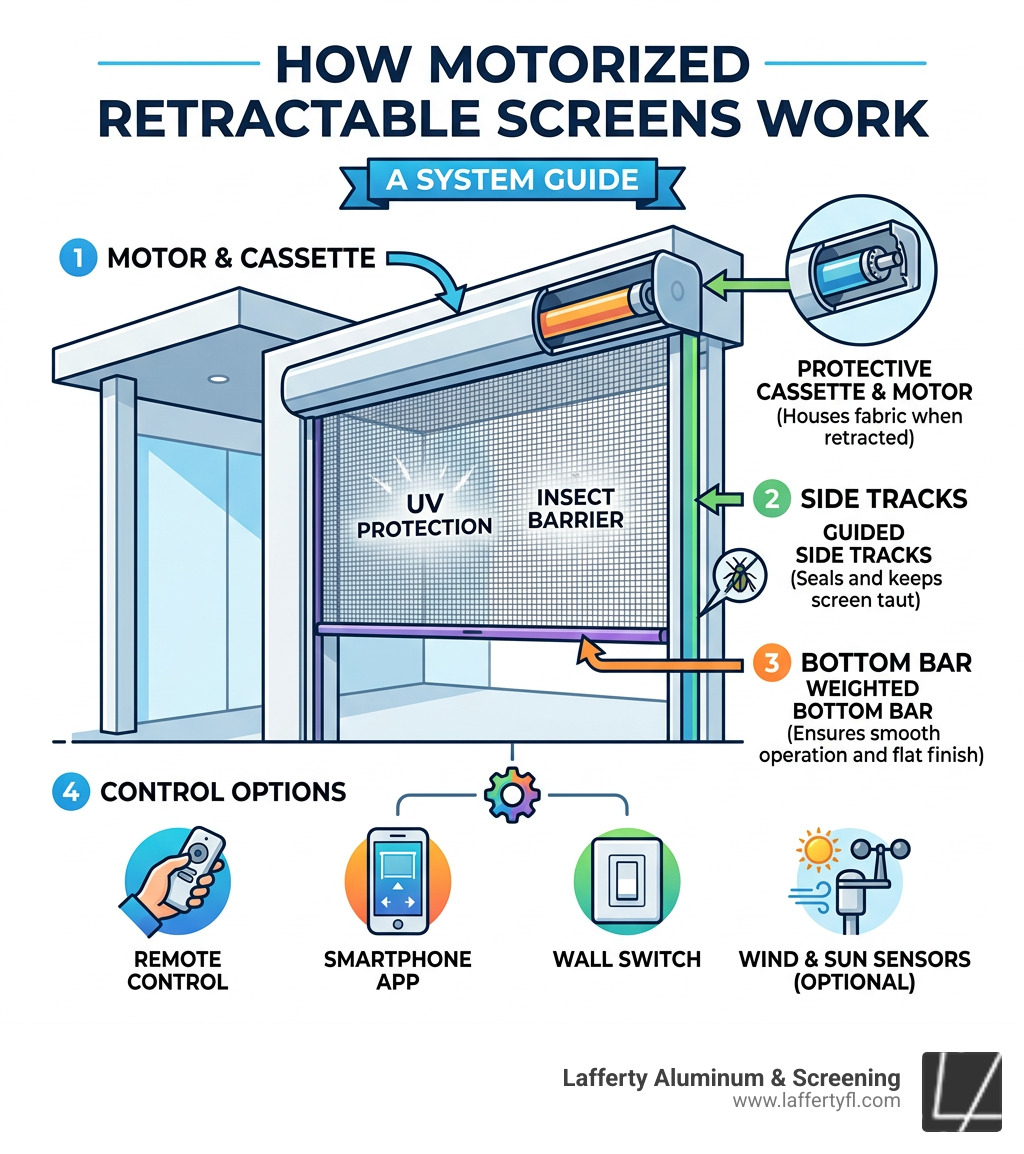
At their core, motorized screens are an evolution of the traditional fixed screen. Imagine a high-quality mesh fabric that lives inside a protective metal box (the housing cassette) mounted above your door or patio opening. When you want protection, a tubular motor inside the cassette unrolls the fabric.
The "magic" that keeps these screens from flapping in the Florida breeze is the side track system. The edges of the fabric are secured within vertical tracks mounted to your columns or door frames. Many high-end systems use a zipper-style or tension-retention mechanism, ensuring the screen stays taut and bug-proof. At the bottom, a weighted bar—often called a bottom bar—pulls the fabric down evenly and creates a tight seal against the floor.
Because they are powered by electricity, you don't have to wrestle with hand cranks or pull cords. Whether it's a Roll-Down Screen for a small window or a massive Motorized Screen for Garages and Patios, the operation is smooth, quiet, and instantaneous.
The primary reason we install so many of these systems in Melbourne and the surrounding Space Coast area is the flexibility they provide. A fixed screen enclosure is great, but it’s always there. With motorized screens, you get a seamless transition between an open-air environment and a protected sanctuary.
For those with a lanai, these screens act as an "instant room" upgrade. During a clear spring morning, you can leave the screens up to enjoy the unobstructed view of your backyard. As the sun gets higher and the heat intensifies, you lower the screens to drop the temperature. When evening hits and the "Florida state bird" (the mosquito) comes out to play, you seal the space completely. We also see many homeowners using Retractable Garage Screens to turn their dusty garages into ventilated workshops, gyms, or man-caves without the pest intrusion.
One of the most impressive technical feats of modern motorized screens is their ability to cover massive spans. While traditional screen doors are limited by weight and frame stability, motorized systems can span openings up to 30 feet wide and 16 feet tall.
This makes them the perfect companion for modern architectural features like bi-fold doors or large "disappearing" glass walls. Instead of having multiple smaller screen panels with vertical bars blocking your view, a single Motorized Patio Screen can cover the entire expanse, preserving that million-dollar Florida view while providing total protection.
Why choose a motorized system over a standard fixed enclosure? It often comes down to the "Three P's": Protection, Privacy, and Property Value.
First, let's talk about the heat. According to the Department of Energy, awnings and solar screens can reduce solar heat gain by up to 77%. In our neck of the woods, that’s the difference between a patio that feels like an oven and one that feels like a breeze-filled oasis. By blocking the sun before it even hits your windows or sliding glass doors, you also reduce the load on your AC system, potentially saving on energy bills.
Beyond heat, Motorized Awnings and screens provide critical UV protection. This isn't just about preventing sunburns; it's about protecting your expensive outdoor furniture, rugs, and even your indoor flooring from fading under the relentless Florida sun.
We often hear from clients in densely populated areas like Viera or Melbourne Beach who want to enjoy their hot tubs or patios without feeling like they are on display for the neighbors. Motorized screens offer incredible daytime privacy.
Depending on the mesh you choose, you can see out perfectly, but people standing outside see a dark, opaque surface. For those who need total light control—perhaps for an outdoor movie night or a garage-turned-bedroom—there are blackout privacy fabrics that block up to 99% of light. This level of Roll-Down Screen versatility is something a fixed screen simply cannot match.
Living on the Space Coast means dealing with wind. Whether it's a summer afternoon thunderstorm or a tropical system, your screens need to be tough. Standard quality motorized screens are typically rated to withstand winds of 30-40 mph while deployed.
However, for those of us in high-wind zones, we offer hurricane-grade motorized garage screens that meet strict Florida Building Codes and Miami-Dade standards. These systems utilize specialized tracks and high-strength fabrics that can actually help protect your home's "envelope" during a storm. Many of these units even come with integrated wind sensors that automatically retract the screen if the gusts get too high, protecting your investment while you're away from home.
One of the most important decisions you’ll make—besides choosing the right installer—is selecting the right screen fabric. Many homeowners assume all mesh is the same, but the material you choose plays a major role in performance, comfort, and durability.
When comparing motorized screens vs fixed screens, fabric options are where motorized systems really stand out.
Most high-quality motorized screen fabrics are made from PVC-coated polyester, which offers:
Choosing the right fabric ensures your screen not only looks good—but performs consistently for years.
In our humid Florida climate, mold and mildew are constant battles. That’s why we use fabrics with anti-bacterial coatings. Furthermore, the way the screen is built matters. Technologies like "sonic welding" seal the edges of the fabric to the zipper tracks, creating a bond that is stronger than the fabric itself.
Another technical detail to look for is the "bottom bar" design. A heavy-duty bar (like an HD 2.5 bar) can offer up to a 68% reduction in horizontal deflection compared to standard bars. This means when the wind blows, your screen stays in its tracks rather than bowing out like a sail. Choosing the right retractable screens for your lanai means looking at these small details that ensure the system lasts for decades, not just a few seasons.
The "motorized" part of motorized screens has come a long way. You generally have two choices for power: hardwired 110V motors or battery-powered units. Hardwired is the gold standard for reliability and speed, especially for large spans. Battery-powered units are great for retrofitting where running electrical wires might be difficult or unsightly.
Modern motors also come with "obstacle detection." This is a safety feature that stops the motor if the bottom bar hits a chair, a pet, or a forgotten toy on its way down. This prevents the fabric from bunching up in the cassette and potentially damaging the system.
We are firmly in the era of the smart home. While every system comes with a handheld remote, the real convenience comes from smart integration. By using a smart bridge or hub, you can:
This level of automation makes motorized retractable screens a true "set it and forget it" luxury.
This is the most common question we get. While every project is custom, the costs of motorized patio screens generally fall between $5,000 and $6,000 per opening for a standard-sized patio or garage.
Several factors influence the final price:
Yes, but with caveats. Most standard screens are designed for "active use" in winds up to 30-40 mph. If a major storm or hurricane is approaching, you should retract the screens into their protective housing.
However, if you live in a particularly exposed area, you should look into hurricane-grade motorized patio screens. These are engineered with reinforced stainless hardware and ultra-strong mesh designed to stay in place even during extreme weather events, providing an extra layer of defense for your home.
One of the best things about these systems is how low-maintenance they are. Because the screen spends much of its life tucked away in a cassette, it stays cleaner than fixed screens.
For more detailed tips, check out our guide on what to look for when buying a motorized retractable awning or screen.
Yes. Motorized screens with solar mesh can block 75–95% of heat and UV rays, helping keep your patio, lanai, or garage significantly cooler while reducing glare from direct sunlight.
Yes. Most motorized screen systems are designed for retrofit installation, meaning they can be added to existing patios, lanais, and garage openings without major structural changes.
With proper installation and maintenance, high-quality motorized screens can last 10–20+ years, even in Florida’s sun, humidity, and coastal conditions.
Yes. Motorized screens are very effective at night when bugs are most active. With the right mesh and proper sealing, they help keep mosquitoes and other insects out while still allowing airflow.
Investing in motorized screens is about more than just home improvement; it's about reclaiming your outdoor space. Whether you're in Titusville, Palm Bay, or right here in Melbourne, the Florida lifestyle is meant to be enjoyed outside—not from behind a glass window.
At Lafferty Aluminum & Screening, we’ve spent over 30 years as a family-owned business perfecting the art of the outdoor enclosure. We understand the local climate, the local bugs, and exactly what it takes to build a system that stands the test of time. From the initial consultation to the final professional installation, we focus on quality that you can see and feel every time you press that button.
Ready to transform your patio, lanai, or garage into the best room in the house? Contact us for Motorized Screens for Garages and Patios today for a free estimate. Let’s make your outdoor living dreams a reality!
We're excited to learn more about your needs and provide you with a personalized quote. Please fill out the form, and our team will get back to you with a detailed estimate to kickstart your project.


