Features & What to Expect
If you spend time on a Florida patio, you already know the problem. The sun is relentless, the heat builds fast, and once the sun goes down, most outdoor spaces go dark and unused. An electric awning solves both problems at once — instant, adjustable shade during the day, and with integrated LED lighting, a lit, usable patio at night, all controlled from the same remote or switch.
This guide walks you through how the motor and electrical system work, what to know about adding LED lighting, sizing and materials, installation requirements, and what to expect from top brands.
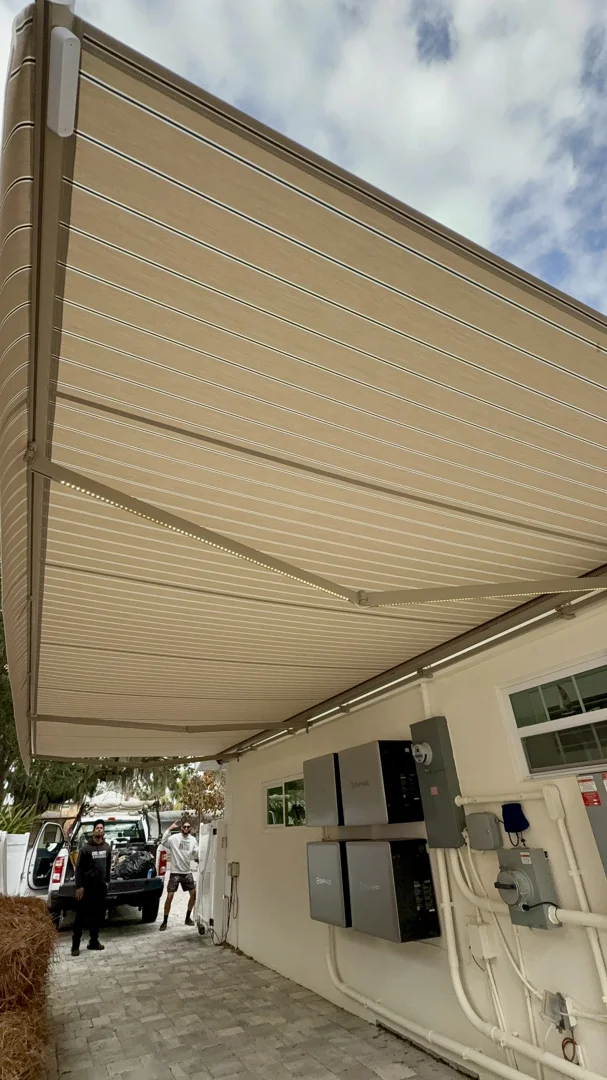
At its core, an electric awning is an electrical system built around a high-torque motor — commonly from brands like Somfy or Dooya — hidden inside the roller tube. That motor drives lateral arms that push the fabric out or pull it back into the housing at the push of a button, a wall switch, or a smartphone app.
The electrical connection that powers the motor is also what makes integrated LED lighting possible. Instead of running separate wiring for patio string lights or fixtures, many homeowners have LED lighting built directly into the awning frame, powered off the same circuit as the motor. One electrical setup, two functions: shade and light.
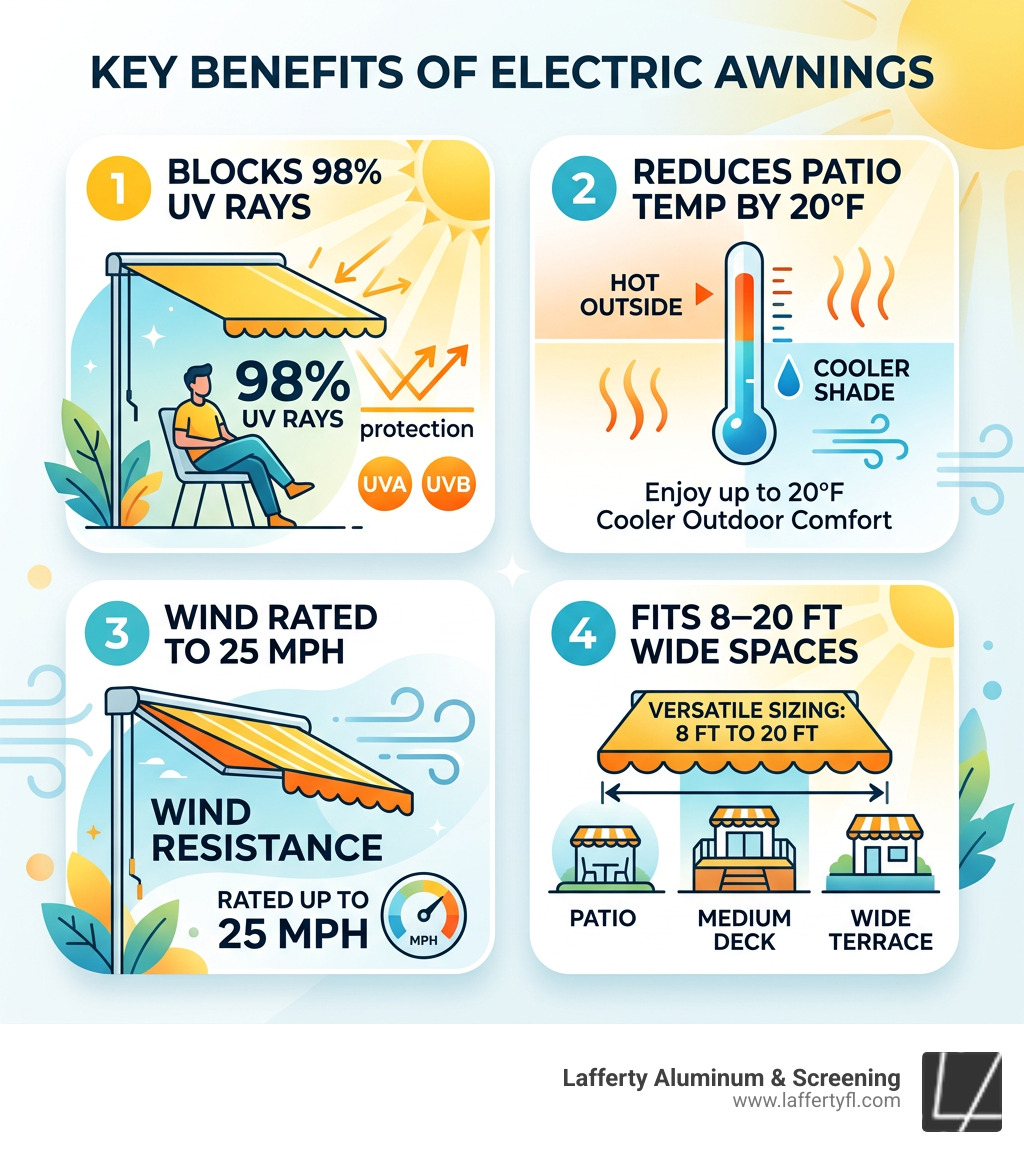
The benefits go beyond convenience. In our experience serving the Space Coast and Treasure Coast, the biggest reason homeowners invest in electric awnings is health and comfort — they block up to 98% of harmful UVA and UVB rays. They're also energy efficient: by shading sliding glass doors and windows, they cut the "greenhouse effect" indoors and reduce cooling costs.
There's also a furniture-protection benefit. Florida's sun bleaches patio furniture and indoor flooring fast, and a well-placed Retractable Awning keeps those colors vibrant for years longer. From a real estate perspective, these additions boost curb appeal and property value by effectively adding usable square footage to your outdoor living space.
The same electrical wiring that runs your awning's motor can typically also run integrated LED lighting — recessed directly into the frame rather than bolted on as a separate fixture. A few things to know:
This is often the single upgrade homeowners say they wish they'd added from the start — it's the difference between a patio that's only usable until sunset and one that works for dinner, drinks, or just sitting outside well into the evening.
The real convenience of an electric awning is that you don't have to get up to adjust anything. Remote operation typically works from up to 30 feet away, and many systems support smart home integration — controlling both the awning and its LED lighting via smartphone app or voice command.
The temperature impact is immediate: it can be up to 20°F cooler under the shade of an electric awning compared to standing in direct sun. Whether you're hosting a BBQ in Viera or relaxing in your backyard in Rockledge, that drop — combined with LED lighting after dark — is what turns a patio from an afternoon-only space into an all-day, all-evening one.
Manual awnings are cheaper upfront, but the switch to electric is driven by convenience, safety, and — for systems with LED lighting — functionality that manual awnings simply can't offer. Manual cranks are physically demanding and often lead to "awning neglect," where an owner leaves the fabric extended during a storm because they don't want to go out and crank it in.
Electric models are easier to use and more accessible for homeowners with limited mobility. Because they're so easy to retract, they're more likely to be protected during bad weather, which extends the unit's lifespan compared to a manual awning caught in a sudden Florida afternoon thunderstorm. And only electric systems can support integrated LED lighting, wind sensors, and smart home control — none of that is available on a hand-crank system.
Most residential electric awnings range from 8 to 20 feet wide. The fabric width is typically about 5 inches narrower than the total frame width to allow room for the internal motor and electrical components.
Fabric Type and Durability
Standard projection lengths (how far the awning extends from the wall) are usually 7, 9, or 10 feet. For larger patios in areas like Sebastian or Palm Bay, some premium models cover 152 to 184 square feet. Always look for powder-coated aluminum frames for maximum resistance to our salty coastal air — the frame, motor housing, and any LED fixtures should all be built from corrosion-resistant materials.
Lateral arm awnings are the most popular option because they extend horizontally without vertical support poles, keeping your patio view unobstructed. Drop arm awnings are better suited for windows, pivoting downward to block low-angle sun.
You can customize the frame color (typically white, bronze, or cream) and choose from hundreds of valance styles, from a traditional scalloped edge to a modern straight valance.
We recommend Sunbrella acrylic fabrics — 100% solution-dyed, meaning the color runs through the entire fiber. These often carry fire-retardant ratings (like Cal 117) and Greenguard certification for low chemical emissions, holding up to the intense UV exposure common in places like Merritt Island and Cocoa Beach.
Installing an electric awning isn't just mounting brackets to a wall — it's an electrical installation. Most units require a dedicated 120V AC grounded outlet, and if LED lighting is included, that circuit typically powers both. Power cords usually run 18 feet, with 24-foot options available for larger reaches.
Mounting height matters: most manufacturers require a minimum of 7 feet 6 inches, plus 8 to 10 inches of unobstructed vertical wall space to anchor brackets into structural elements like studs or headers. The wall also needs to support the unit's weight, which ranges from 100 to 200 lbs depending on size — something we always check first for homeowners in areas like Sebastian.
Modern electric awnings include safety sensors as part of the electrical system. Anemometers (wind sensors) monitor wind speed and automatically retract the awning if conditions get too gusty. Most units are rated for winds up to 25 MPH, but we recommend setting sensors to trigger at 15–20 MPH for extra protection. Motion sensors can also detect excessive bounce in the front bar and signal the motor to retract automatically.
A common question: what happens if the power goes out? Most quality electric awnings include an emergency hand crank or manual override so you can retract the fabric by hand during an outage — a real possibility during Florida's stormy season. Note that this override typically covers the motor only; integrated LED lighting will be unavailable until power is restored. Some premium models offer battery backups or solar kits for added reliability.
These steps help your investment — motor, wiring, LED lighting, and fabric alike — perform reliably for decades. Homeowners in areas like Palm Bay know that a little routine care goes a long way in our humid climate.
One of the most common mistakes is leaving an electric awning extended during strong winds or sudden Florida storms. Even high-quality systems are designed for shade and comfort, not to withstand severe weather — wind gusts stress the fabric, arms, motor, and mounting hardware, especially during Florida's unpredictable afternoon thunderstorms.
Another frequent issue is retracting the awning while the fabric is still wet. Rolled-up moisture can lead to mold, mildew, musty odors, fabric staining, and premature wear over time.
Whenever possible, let the awning fully dry before retracting it. We also recommend:
While many brands market themselves as DIY-friendly, professional mounting is highly recommended. These units are heavy (often 100+ lbs) and require at least two or three people to lift. You also need specific tools like a power drill, level, and heavy-duty lag bolts. If you aren't comfortable drilling into your home's structural headers or handling electrical connections, it's safer to call the pros.
A high-quality frame can easily last 20 to 30 years. The motors are usually rated for 10+ years of regular use. The fabric is the most "consumable" part, generally lasting 5 to 10 years before it might need a refresh. Most premium brands offer a 5 to 10-year warranty on the frame and fabric, and a 2 to 5-year warranty on the electronics.
Electric awnings are primarily designed for sun protection, not heavy rain. However, they can handle light showers if they have a proper pitch adjustment (usually 5 to 35 degrees) to allow for water runoff. You should never allow water to "pool" on the fabric, as the weight can bend the arms. Rain sensors are an excellent accessory that will automatically retract the unit when moisture is detected.
Yes, in light rain—but always retract during heavy storms!
Schedule your motorized awning consultation today and let us help you build a shaded, well-lit outdoor space.
We're excited to learn more about your needs and provide you with a personalized quote. Please fill out the form, and our team will get back to you with a detailed estimate to kickstart your project.


