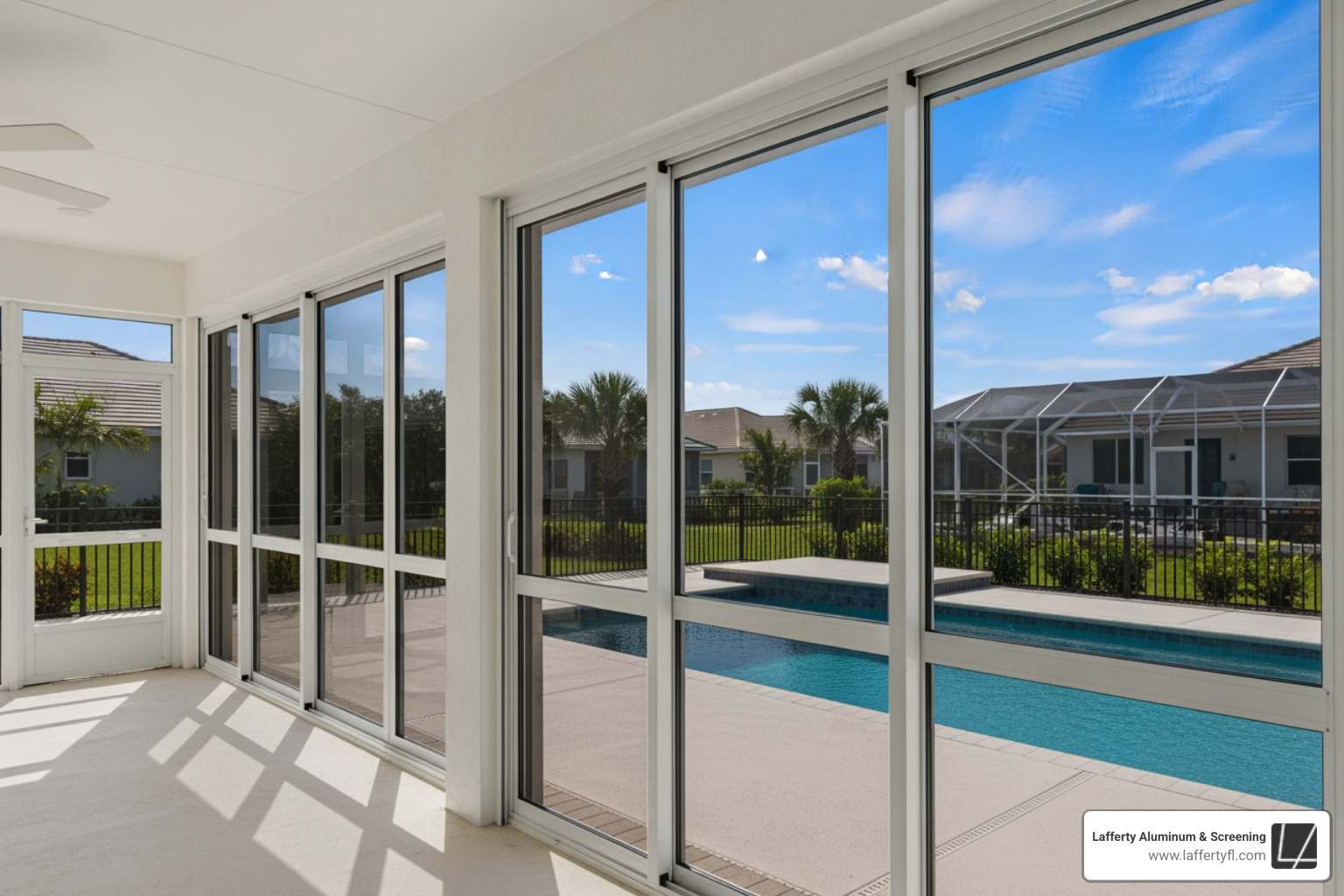
Enclosing a lanai is the process of adding glass, acrylic, or vinyl panels to an existing screened or open lanai to create a protected, year-round living space. Here's a quick overview of how it works:
For Florida homeowners, the lanai is already a cherished part of daily life. But a screened lanai only goes so far. Bugs still sneak in. Rain blows sideways. Summer heat makes the space unusable for months at a time. And in hurricane country, an unprotected lanai can feel more like a liability than an asset.
That's exactly why so many coastal Florida homeowners are choosing to take the next step. Enclosing a lanai turns a seasonal, sometimes frustrating outdoor space into a comfortable, protected room you can actually use — all year long. It adds real square footage, boosts home value, and removes the headaches that come with an open or lightly screened structure.
But the process isn't as simple as putting up a few panels. Materials matter. Local building codes matter. And in multi-story condos, fire safety compliance can add a whole other layer of complexity.
I'm Cody Lafferty, and with over 10 years of hands-on experience in aluminum and screening — from fabrication and installation to full project management — I've guided countless Florida homeowners through the process of enclosing a lanai from start to finish. In this guide, I'll walk you through everything you need to know to do it right.
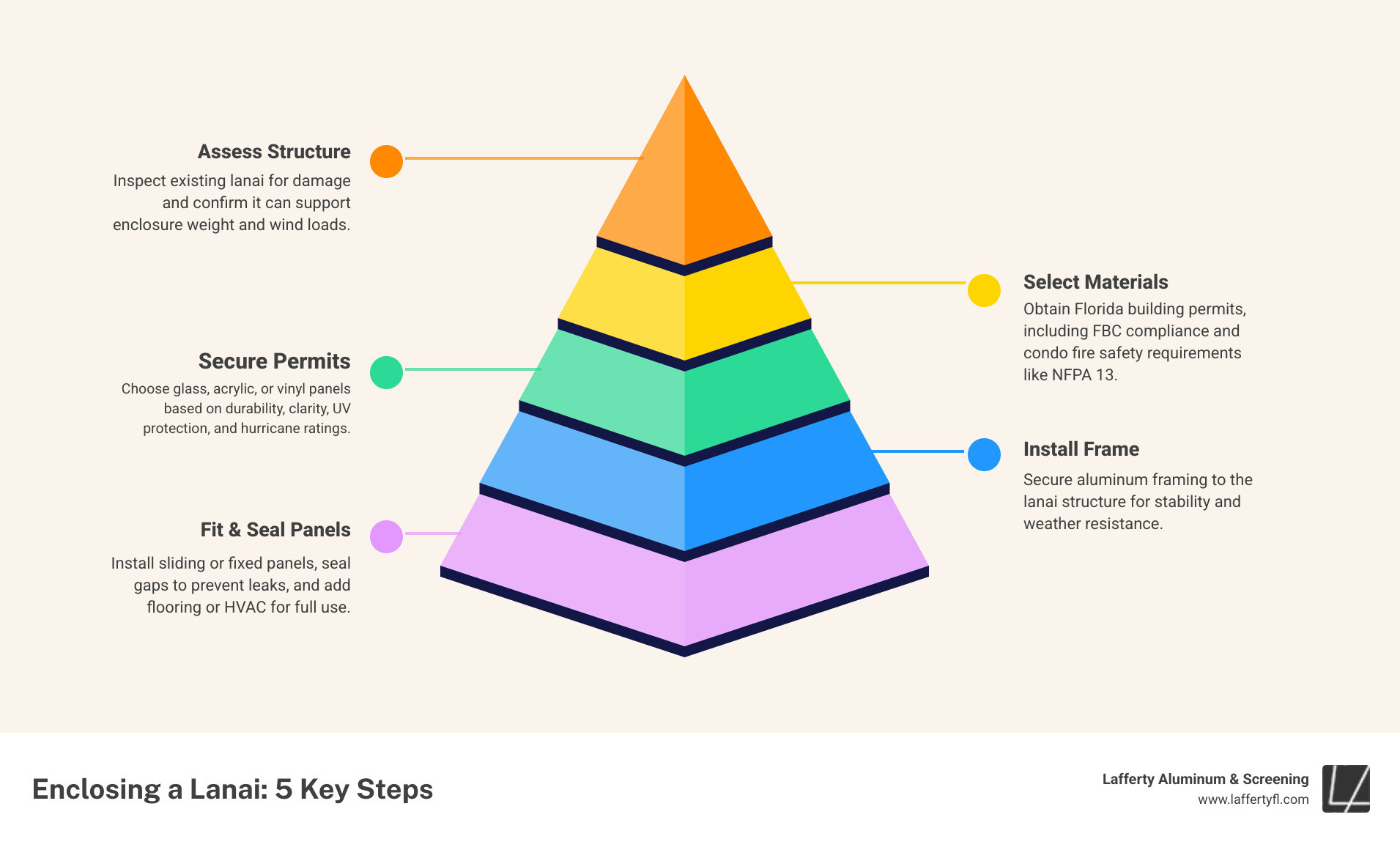
Terms related to enclosing a lanai:
When we talk to homeowners in Melbourne or Palm Bay, the first question is often, "Is it really worth it?" The answer lies in how you want to live. A Lanai Porch is a beautiful thing, but enclosing a lanai elevates it to a true extension of your home.
We love Florida, but we don't love the "no-see-ums" and mosquitoes that treat a standard screen like an open door. By enclosing a lanai with solid panels (glass or acrylic), you create a literal barrier that keeps the smallest pests out. No more smelling like citronella just to enjoy your morning coffee.
In the Space Coast region, we get those sudden afternoon downpours that can soak your outdoor furniture in seconds. An enclosed space allows you to keep your "indoor" furniture outside without fear. It also acts as a buffer against the sweltering Florida heat. With the right insulation and glass, you can even add a mini-split AC system to keep the room at a crisp 72 degrees while it’s 95 outside.
Real estate experts agree that adding functional, conditioned living space is one of the strongest ROIs you can get. Whether you use it as a home office, a gym, or a secondary dining area, you are increasing the usable footprint of your home. In competitive markets like Vero Beach or Rockledge, an enclosed lanai is a major selling point that sets your property apart.
If you live near a busy road in Titusville or a noisy neighborhood in Viera, you know that screens do nothing to block sound. Enclosing a lanai with glass provides a significant sound barrier, turning a noisy patio into a tranquil sanctuary.
Selecting materials is the most critical decision you’ll make. The right choice depends on your budget, how you plan to use the space, and your home’s structural limits. Here is a breakdown of the Options to Enclose Screened Lanai Windows.
FeatureGlass EnclosureAcrylic PanelsVinyl WindowsDurabilityHighest (Impact options available)High (Shatter-resistant)ModerateClarityCrystal ClearGood (Can scratch)Fair (May cloud over time)Wind RatingUp to 150+ mphHighLow to ModerateCost$$$$$$$$$InsulationExcellent (Double-pane)GoodLow
In our coastal environment, aluminum is the gold standard for framing. It is rust-resistant, lightweight, and incredibly strong. We use high-grade aluminum alloys designed to withstand the salt air and humidity of places like Satellite Beach and Merritt Island.
Because we live in a hurricane-prone state, we always recommend looking at impact-rated glass. Some glass enclosures are designed to withstand winds of 150 mph. Even if you choose non-impact glass, adding UV tints can block heat and protect your flooring and furniture from fading in the harsh Florida sun.
This is the "great debate" among homeowners.
To make the space truly yours, consider these upgrades:
Our team of Lanai Builders can help you weigh these options based on your specific house layout.
You can't just slap some windows on a porch and call it a day—at least not if you want to stay legal. Florida has some of the strictest building codes in the country, and for good reason.
This section is particularly important for multi-story buildings and condos. It deals with "vertical separation of openings." The goal is to prevent fire from jumping from one floor’s lanai to the one above it. If you are enclosing a lanai in a high-rise in Cape Canaveral or Cocoa Beach, you must ensure your design meets these fire safety standards.
Every project we do in Brevard or Indian River County requires a permit. This ensures that:
For a deeper dive into the legalities, read A Step-by-Step Guide: How to Enclose Your Lanai for Year-Round Enjoyment.
In many Florida condos, the fire department requires specific "alternative methods" for compliance. Since one-hour fire-rated glass is extremely expensive and heavy, most engineers recommend:
If you’re in a condo, always check with your HOA first. They often have specific aesthetic requirements to ensure all Lanai Screen Enclosures in the building look uniform.
When you hire us to handle your enclosure, we follow a rigorous process to ensure the job is done right the first time. Here is what you can expect during the installation.
We start by looking at your existing slab and roof. Is the concrete cracked? Is the roof tied into the main house properly? We then provide a quote based on your chosen materials. The price per square foot can range from $10 to $50 depending on whether you choose basic vinyl or high-end impact glass.
We submit sealed engineering drawings to the local building department (e.g., Melbourne or Palm Bay). This stage can take a few weeks, depending on how busy the county office is.
Once the permit is in hand, we install the aluminum tracks and vertical members. This frame is the "skeleton" that will hold your windows. It must be perfectly level and securely anchored into the concrete and the overhead beam.
This is where the magic happens. We fit the glass or acrylic panels into the frame. For sliding systems, we ensure the tracks are lubricated and the panels move smoothly.
We use high-grade architectural sealants to close every gap. This prevents water from leaking in during our famous Florida thunderstorms and keeps your cooled air from escaping.
Finally, we add the hardware, locks, and any extras like trim or flooring. For more design inspiration, check out Lanai Builders in Florida Costs Designs Tips.
Cost is the biggest variable. A simple screened-in area might only cost $2,000 to $5,000. However, enclosing a lanai with solid materials is a bigger investment.
While the upfront cost is higher, the ROI is significant. You’re essentially adding a new room to your house. For a detailed breakdown, see our Screened-in Lanai Cost Guide.
This is a "maybe." In many Florida counties, if you keep the original sliding glass doors between your house and the lanai, the lanai is still considered "outdoor space" or a "porch," which typically doesn't trigger a tax increase.
However, if you remove those doors to create a seamless floor plan, the county will likely reclassify that area as "living space," which can increase your property tax assessment. Always consult with a local tax expert or the Brevard County Property Appraiser if you're concerned.
To keep your enclosure looking new, we recommend:
Enclosing a lanai is more than just a home improvement project; it’s a lifestyle upgrade. Whether you're looking to escape the mosquitoes in Fellsmere, block the salt spray in Indialantic, or simply add a quiet home office to your house in West Melbourne, an enclosure provides the versatility and protection you need.
At Lafferty Aluminum & Screening, our team has over 30 years of combined experience perfecting the art of outdoor living. As a family-owned business, we pride ourselves on quality craftsmanship and treating every home as if it were our own. We understand the unique challenges of the Space Coast and Treasure Coast climates, and we have the engineering expertise to ensure your enclosure is both beautiful and code-compliant.
Ready to transform your outdoor space into a year-round oasis? Don't let another rainy season or buggy summer pass you by. Start your project today! and let us help you design the perfect enclosed lanai for your Florida home.
We're excited to learn more about your needs and provide you with a personalized quote. Please fill out the form, and our team will get back to you with a detailed estimate to kickstart your project.


