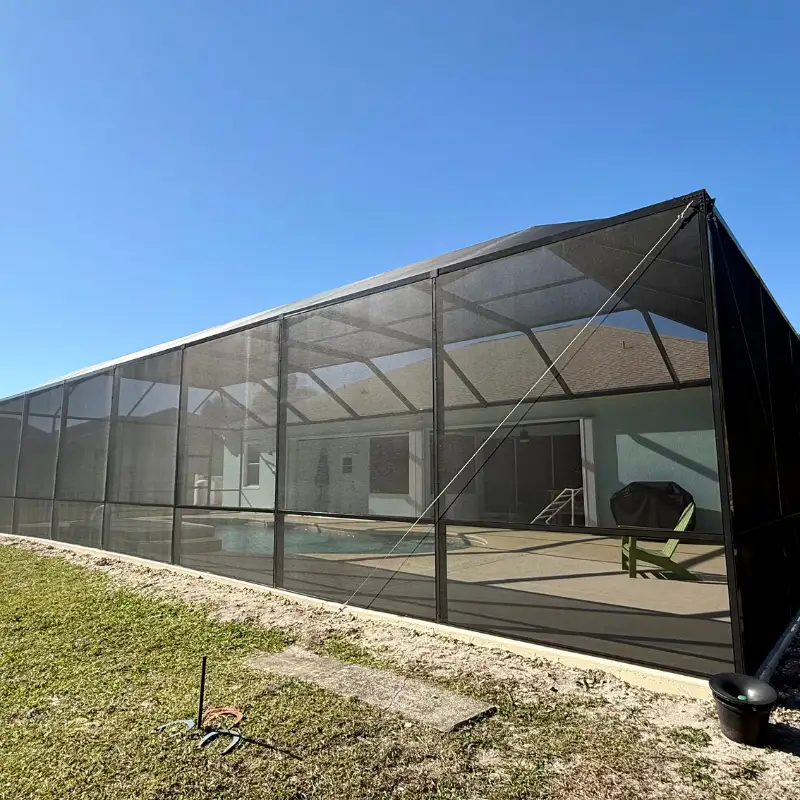
Patio enclosure maintenance Florida homeowners rely on comes down to a few core tasks done consistently:
Florida's climate is unlike anywhere else in the country. The combination of intense UV rays, high humidity, salt air, and seasonal storms puts constant stress on screen enclosures. A 2024 study found that homeowners throughout the Southeast are already losing comfortable outdoor days each year — making a well-maintained enclosure more valuable than ever.
Without regular upkeep, small problems escalate fast. A tiny screen tear can become a full panel replacement after one strong gust of wind. Moisture sitting in tracks turns into mold. Neglected fasteners rust and weaken the entire frame.
The good news? Most of this is preventable with simple, consistent care.
I'm Cody Lafferty, and with over 10 years of hands-on experience in aluminum and screening across fabrication, installation, and project management, I've seen how proper patio enclosure maintenance Florida routines can double the lifespan of an enclosure. In this guide, I'll walk you through everything you need to know to protect your investment and keep your outdoor space looking and performing its best.
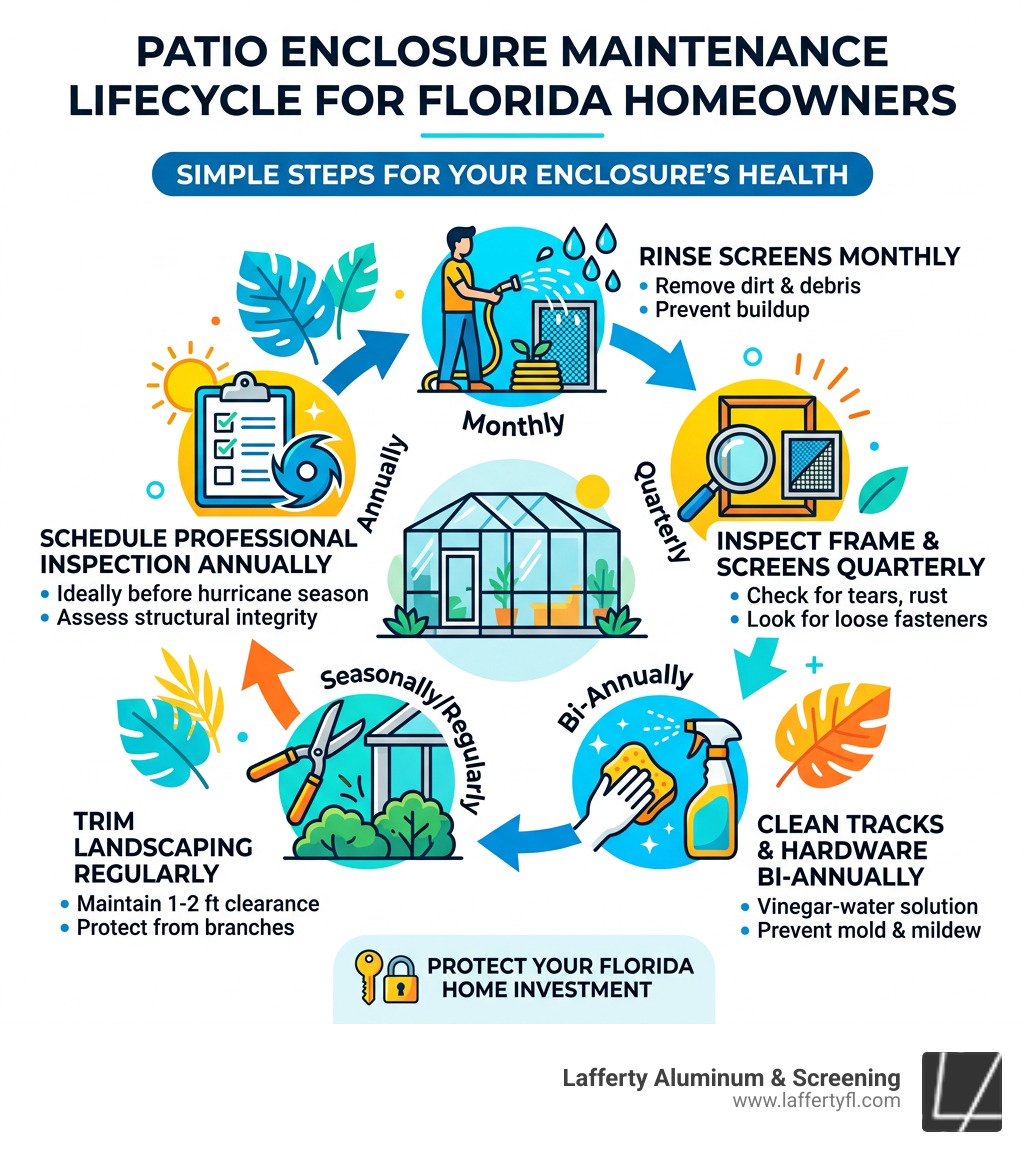
Simple patio enclosure maintenance Florida glossary:
Living on the Space Coast or the Treasure Coast means we get the best of the "Sunshine State," but our homes pay a price for that beauty. The primary reason patio enclosure maintenance Florida is so vital is the aggressive nature of our local environment. Between Melbourne and Vero Beach, we deal with high humidity, intense UV radiation, and, most importantly, salt air.
Salt air is a silent killer for aluminum structures. If you live within a few miles of the coast, salt particles accumulate on your enclosure’s frame and mesh. Over time, this leads to oxidation and corrosion, which can pit the aluminum and weaken the structural integrity of the entire cage. Regular maintenance washes these corrosive elements away before they can bond to the metal.
Furthermore, Florida's humidity is a breeding ground for organic growth. Mold, mildew, and algae don't just look unsightly; they can actually trap moisture against the screen spline and fasteners, accelerating the breakdown of materials. By staying on top of the importance of regular screen enclosure cleaning, you protect your property value. A well-maintained enclosure adds curb appeal and usable square footage, while a neglected one becomes a liability during a home inspection.
Finally, we must consider the Florida wind code requirements. Screen enclosures in our region are engineered to withstand specific wind loads. However, that engineering only holds up if the fasteners are tight and the aluminum isn't compromised by rust. Proper maintenance ensures your structure remains "storm-ready" and compliant with safety standards.
Cleaning your enclosure doesn't have to be a grueling weekend chore. In fact, if you do it regularly, it’s quite simple. We recommend a monthly rinse with a standard garden hose. This simple act removes loose pollen, dust, and salt spray that hasn't yet "baked" onto the surface.
For a deeper clean, follow these steps for how to clean patio screens safely:
Avoid using a pressure washer on the high-power setting. While it's tempting to "blast" the dirt away, the high pressure can easily tear the mesh out of the spline channel or strip the paint/powder coating off the aluminum.
In cities like Palm Bay and Titusville, the humidity often leads to green algae or black mold appearing on the lower sections of the screen or inside the tracks. This organic buildup thrives in the shade and where water tends to sit.
To tackle this, a white vinegar and water solution (50/50 mix) is your best friend. Vinegar is a natural antifungal that kills mold spores without damaging your screens or harming your surrounding lawn. Spray the solution onto the affected areas, let it sit for 10-15 minutes, and then gently scrub with a soft brush.
Pay special attention to the tracks. Dirt and organic matter often collect here, holding moisture against the bottom rail. This is a common cause of premature frame rot. Use a small brush (an old toothbrush works great) to clear out the debris and ensure the "weep holes" (the small drainage slots in the bottom track) are clear so water can escape. For more detailed steps, check out our how to clean a screen enclosure guide.
Regular cleaning gives you the perfect opportunity to perform a visual inspection. You don't need to be a contractor to spot the early warning signs of trouble. We recommend doing a "walk-around" every three months.
For a comprehensive checklist, refer to our page on screen maintenance.
In Florida, "seasonal maintenance" is synonymous with "hurricane prep." Between June and November, your patio enclosure needs to be at its strongest. One of the most overlooked aspects of storm readiness is landscaping.
We recommend maintaining a 2-foot buffer between your enclosure and any trees or shrubs. During a storm, branches rubbing against the screen act like sandpaper, quickly wearing through the mesh. Larger branches can fall and crush the aluminum frame. Keeping your hedges trimmed also improves airflow, which reduces the "sail effect" (wind pressure) on the enclosure.
Before a predicted storm, check all your door latches and closers. A door that swings open during a hurricane can act like a giant lever, potentially ripping the frame apart. Ensure all fasteners are tight and that there are no loose panels that could catch the wind. If you've already experienced a rough season, you may need storm damage repair for your screen enclosure to ensure it stays standing through the next one.
The moving parts of your enclosure — the doors and their hardware — require specific attention. Because these are used daily, they are often the first things to break.
For more professional hacks, see our pro tips to maintain your screen enclosure.
Many homeowners ask us if they should handle repairs themselves or call in the pros. The answer usually depends on the scale of the job.
TaskDIY ApproachProfessional ApproachSmall TearScreen patch kit (visible, temporary)Panel replacement (seamless, durable)Loose SplinePush back in with a spline toolReplace with new, correctly sized splineRusty ScrewsWire brush and touch-up paintReplacement with Nylo-Tec or stainless fastenersAlgae/MoldVinegar and water scrubProfessional soft-wash treatmentFull RescreenNot recommended (safety/tension issues)Complete restoration with 10-15 year warranty
While a DIY patch might save you a few dollars today, it often fails during the next heavy rain or wind event. Professional screen enclosure repairs ensure that the mesh is pulled to the correct tension — not too tight (which can bend the frame) and not too loose (which causes sagging).
If your aluminum frame is looking chalky or faded, you might consider frame painting. This is a specialized process that involves cleaning, priming, and using an architectural-grade finish that can make an old cage look brand new for a fraction of the cost of a full replacement.
There are times when patio enclosure maintenance Florida requires more than a bucket and a brush. You should call a licensed contractor like Lafferty Aluminum & Screening if you notice:
We often recommend Phifer™ screen materials. These are Made-in-America products designed specifically for high-UV environments. When installed by pros, these screens can last 10 to 15 years or more. If you're in the Melbourne or Palm Bay area, our screen porch repair services can help you evaluate the current health of your enclosure.
For most homes in Brevard and Indian River County, a quick monthly rinse with a hose is sufficient. A deep clean with mild soap and a soft brush should be done twice a year — once in the spring to remove pollen and once in the fall after the peak of hurricane season.
We generally advise against it. If you must use one, keep it on the lowest "fan" setting and stay at least three feet away from the mesh. High-pressure streams can easily cut through screen material or blow the spline right out of the channel. A garden hose with a good nozzle is usually all you need.
If your screens have turned a silvery-gray color, feel brittle or "crunchy" when touched, or if multiple panels are tearing at the edges simultaneously, the mesh has reached the end of its lifespan. Replacing individual panels at that point is just a "band-aid"; a full rescreen is more cost-effective in the long run.
Your patio enclosure is an essential part of the Florida lifestyle. It’s your shield against the heat, the bugs, and the debris, allowing you to enjoy the beautiful Space Coast weather year-round. However, because it's constantly exposed to the elements, it requires a little TLC to keep it in top shape.
By following a consistent patio enclosure maintenance Florida routine — rinsing monthly, inspecting for damage, and keeping your landscaping in check — you can significantly extend the life of your enclosure and save thousands of dollars in premature replacement costs.
At Lafferty Aluminum & Screening, our family-owned team has over 30 years of combined experience serving Melbourne, FL, and the surrounding areas. We pride ourselves on quality craftsmanship and helping our neighbors make the most of their outdoor living spaces. Whether you need a simple repair, a full rescreening, or are looking to install new aluminum patio covers, we have the expertise to get the job done right.
Don't wait for the next big storm to find out if your enclosure is up to the task. Take a few minutes this weekend to walk around your patio, check those fasteners, and give your screens a fresh rinse. Your home (and your peace of mind) will thank you!
We're excited to learn more about your needs and provide you with a personalized quote. Please fill out the form, and our team will get back to you with a detailed estimate to kickstart your project.


