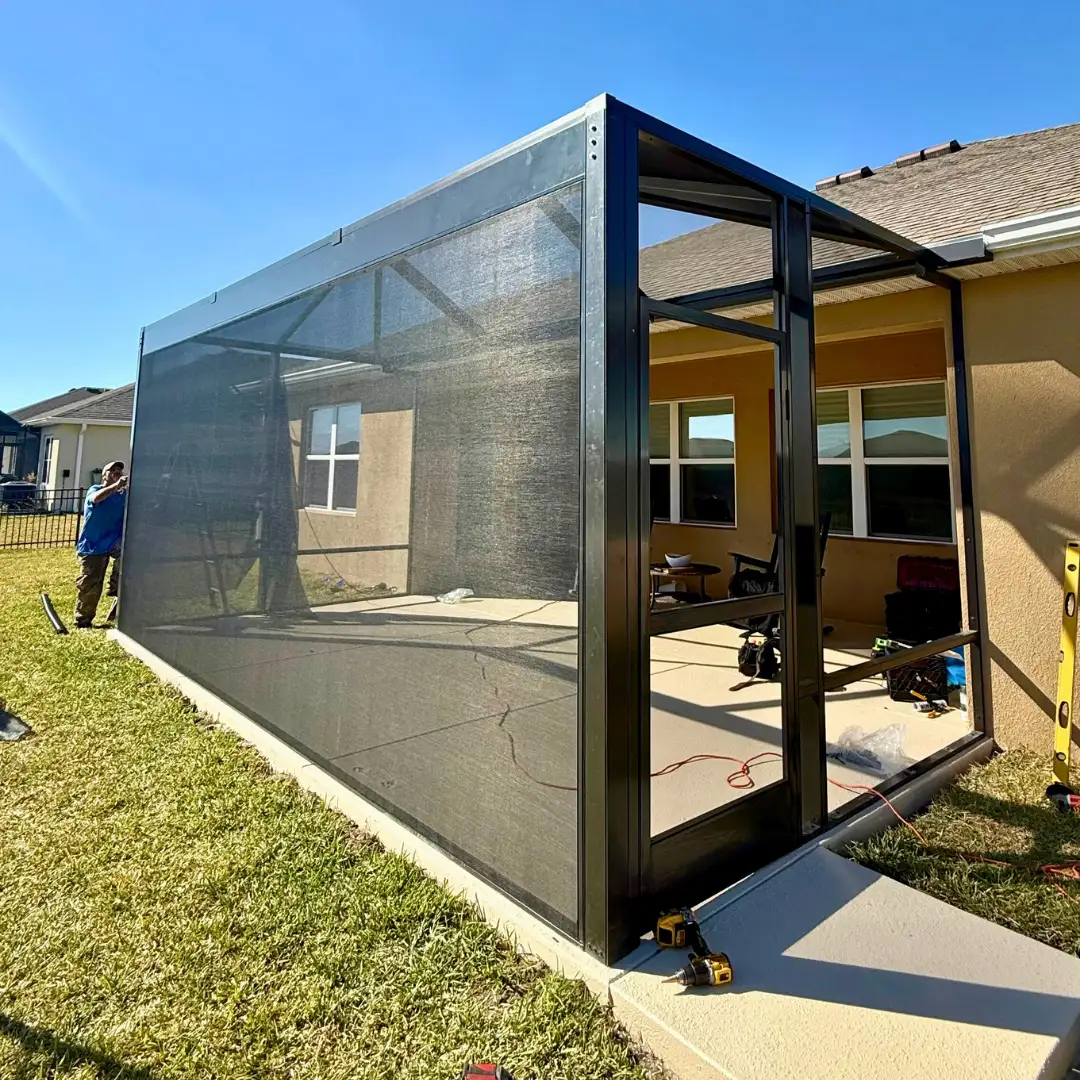
Patio screen enclosures are structured frameworks of aluminum or steel fitted with mesh screening that enclose an outdoor space — turning an open patio, deck, or pool area into a protected, usable room without walls.
Quick answer: If you live in coastal Florida, you already know the problem. Your patio looks great — but the moment you step outside, the bugs find you. The afternoon sun is punishing. And when storm season rolls around, that outdoor furniture stays covered for months.
A screen enclosure changes that equation. It gives your family a usable outdoor space for more of the year — without sacrificing the breeze or the view.
And the demand is real. Across the Tampa Bay area alone, more than 50,000 screen enclosure projects have been completed. Nationally, over 5 million porch screening systems have been sold.
This guide covers everything — types, materials, costs, installation, maintenance, and the questions Florida homeowners ask most.
I'm Cody Lafferty, and with over 10 years of hands-on experience in aluminum fabrication, installation, and project management, I've worked on patio screen enclosures of every size and complexity across Florida. I'll walk you through what actually matters when choosing, installing, and maintaining an enclosure that holds up in our climate.

When we talk to homeowners in Melbourne or Titusville, the first thing they mention isn't usually the architecture—it’s the mosquitoes. In Florida, patio screen enclosures are less of a luxury and more of a survival tool for outdoor lovers.
Beyond the obvious pest control, these structures offer a massive reduction in debris. If you’ve ever spent your Saturday morning sweeping oak tassels or pine needles off your Screened Patios, you’ll appreciate how a mesh barrier keeps your floor cleaner for longer. This also applies to pool owners; keeping leaves out of the water reduces chemical consumption and pump wear.
There are also surprising energy savings involved. By shading the walls of your home that are usually baked by the Florida sun, an enclosure can lower the ambient temperature of your indoor living spaces, taking some of the load off your AC unit.
Privacy is another key factor. Depending on the mesh weave you choose, you can achieve a "one-way" visibility effect that lets you see out clearly while making it harder for neighbors to see in. For a deeper dive into how these systems function, check out this Pool & Patio Enclosure Screening Guide.
Not all Screen Enclosures are created equal. Depending on your budget and how you plan to use the space, you have several directions you can go:
The "screen" part of patio screen enclosures is where the science happens. We typically work with two primary materials: fiberglass and polycore.
Mesh TypeBest ForKey FeatureStandard FiberglassGeneral use18x14 weave balances airflow and visibilityPolycore (Pet Screen)High-traffic areasExtremely high burst point; resists claws and debrisNo-See-Um MeshCoastal/Marsh areasFiner 20x20 weave to block tiny biting insectsSolar ScreenWest-facing patiosBlocks up to 90% of solar heat gain
Standard pool and patio mesh typically features an 18x14 weave with a .013" diameter thread. This configuration is specifically designed to meet Florida building codes while providing optimal airflow. For a visual comparison of these materials, see this Video - Pool & Patio Screen Overview.
The skeleton of your enclosure needs to be "Florida tough." We use extruded aluminum frames because they are lightweight, rust-proof, and can be powder-coated in colors like white or bronze to match your home’s trim.
For larger spans, we utilize internal steel plate gussets and connectors to ensure the structure can withstand the wind loads required by local municipalities. If you are looking for a solid roof, insulated "sandwich" panels are the gold standard. These panels feature a foam core between two sheets of aluminum, providing excellent thermal resistance and a walkable surface for maintenance. Professional Patio Screen Installation ensures these components are integrated seamlessly with your existing roofline.
Planning a project in Brevard or Indian River County requires looking at more than just square footage. You have to consider:
Regarding costs, a simple screen repair might only run $100 to $400, but a full pool screen replacement or new installation for a standard size can range from $1,000 to $3,000 and up, depending on the complexity and materials. Many homeowners find that the added home value and usability make this a sound investment. We often point clients to our Screened Patio Enclosure Cost Guide for a more detailed breakdown.
While DIY kits exist, they often come with a "1/5 difficulty" rating that can be misleading when you're trying to anchor into a house wall or handle 20-foot aluminum beams.
Professional Porch Enclosures offer several advantages:
For those who want to keep their investment looking new, these Patio Enclosure Maintenance Help Tips are invaluable.
One of the best things about aluminum patio screen enclosures is that they are low-maintenance, but they aren't "no-maintenance." In our humid climate, bronze frames are excellent at hiding mildew, but you should still wash the frame and mesh periodically with mild soap and water.
Pro-tip: Avoid using pressure washers directly on the mesh, as the high pressure can stretch or tear the fiberglass fibers.
If you already have an enclosure but feel like you're living in a birdcage, you might be a candidate for a retrofit. We can often replace old, cluttered framing with an ExtremeView beam. This allows us to remove those middle vertical posts, giving you an unobstructed view of your backyard while keeping the same footprint. This is a popular upgrade for Screened Porches that were built 15 or 20 years ago.
In Florida, we don't worry much about snow, but wind is a different story. Permanent aluminum enclosures are engineered to meet regional wind codes. However, if you have a temporary "soft top" or vinyl enclosure, these are not designed for high winds. You should disassemble the roof and panels during inclement weather or the off-season to prevent damage.
Absolutely. Many of our projects involve Screened Patio Enclosures that just need a "face-lift." We can perform rescreening, replace rusted fasteners with anti-corrosion versions, or even add a new door system. Retrofitting an ExtremeView beam into existing framing is one of the most common ways to modernize an older enclosure.
Aluminum frames are incredibly durable and can last decades. The screen mesh itself usually has a lifespan of 10 to 12 years, though premium vinyl canvas used in some specialty enclosures can last 15 to 18 years. Factors like sun exposure and proximity to the salt spray of the Atlantic will influence these timelines.
At Lafferty Aluminum & Screening, we believe your backyard should be an extension of your home, not a place you avoid because of the heat or the bugs. With over 30 years of combined team experience right here in Melbourne, FL, we’ve seen how a well-designed enclosure can transform a home.
Whether you are in Palm Bay, Titusville, or Vero Beach, we focus on quality craftsmanship and customer satisfaction. We don't just "put up screens"—we build custom outdoor living solutions tailored to the Space Coast lifestyle. If you're ready to take back your outdoor space, explore our options for Patio Screen Enclosures and let us help you design your perfect backyard oasis.
We're excited to learn more about your needs and provide you with a personalized quote. Please fill out the form, and our team will get back to you with a detailed estimate to kickstart your project.


