Lanai screen enclosures are roofed, open-sided outdoor living spaces fitted with fine mesh screening - designed to keep bugs and debris out while letting in fresh air, natural light, and your backyard views.
Here's a quick breakdown of what they offer:
FeatureLanai Screen EnclosureBug protectionYes - fine mesh blocks insectsFresh air flowYes - open-sided designWeather shelterPartial - roof blocks rain and sunYear-round useYes - especially in Florida's climateProperty valueIncreases home valueCost vs. sunroom~30% less expensive
The concept traces back to Hawaii, where a lanai simply meant a roofed, open-sided living area connected to the home. In Florida, that idea evolved into fully screened structures built to handle heat, humidity, and the relentless bug pressure that comes with coastal living.
If you've ever abandoned your patio because of mosquitoes, watched your pool fill with oak leaves, or wished you could actually use your backyard after 6pm - a screened lanai is built to solve exactly that.
I'm Cody Lafferty, and with over 10 years of hands-on experience designing and installing lanai screen enclosures across Florida, I've seen how the right enclosure transforms an underused patio into a space families actually live in. In this guide, I'll walk you through everything you need to know to make a confident decision.
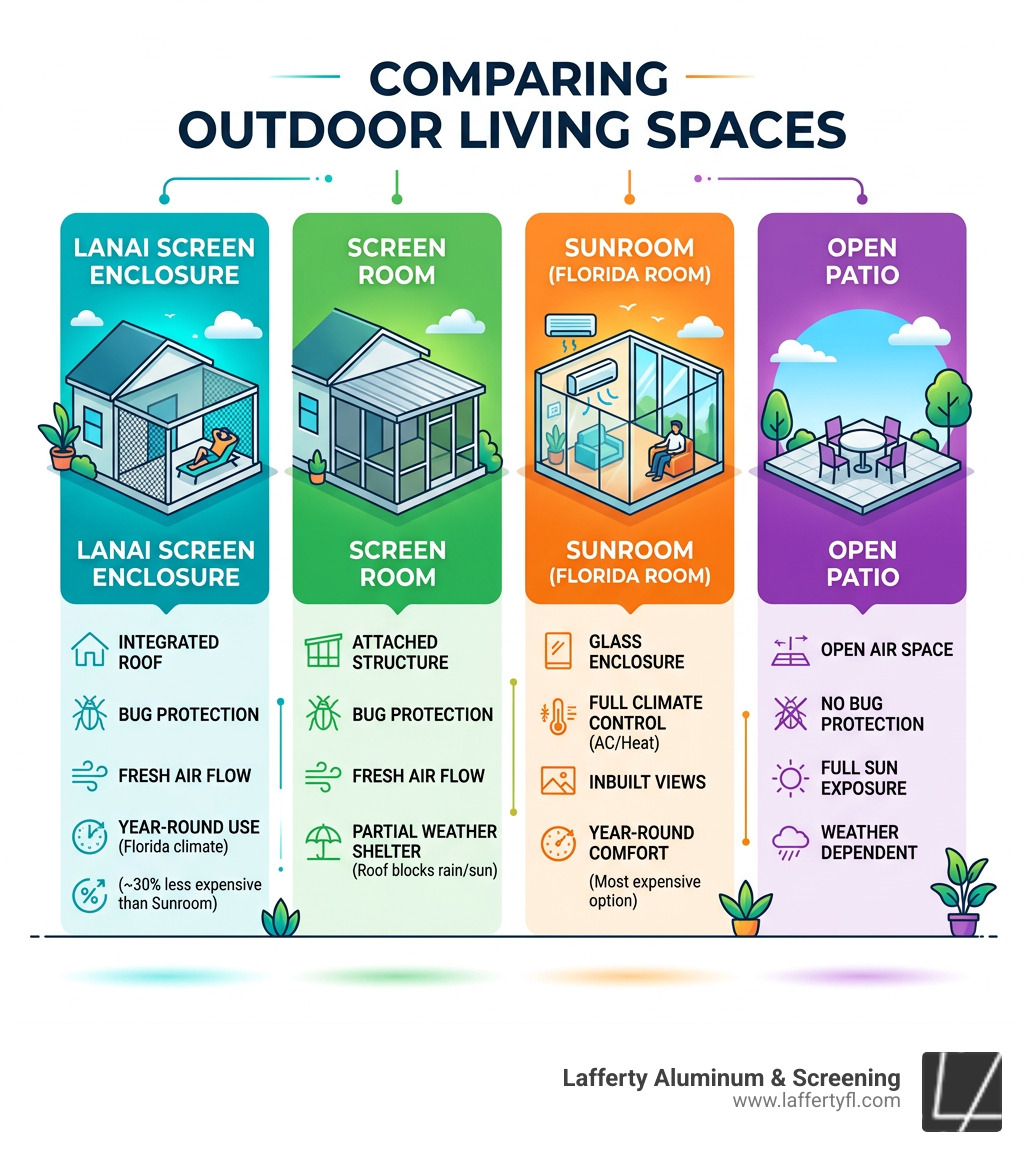
To the untrained eye, any screened-in area might look the same, but a true lanai has specific architectural DNA. Unlike a simple screen room that might be "tacked on" to the back of a house, a lanai is typically integrated into the home’s original roofline. It feels like a natural extension of your indoor living room rather than an afterthought.
The most defining feature is the roof. A lanai screen enclosure uses a solid roof—often the same shingles or tiles as the rest of your house—to provide permanent shade and protection from Florida’s sudden afternoon downpours. Beneath that roof, we install high-grade aluminum framing and mesh to create the "walls."
Lanais aren't built on grass or dirt. They feature "hard flooring"—think pavers, stamped concrete, or tile—that is designed to withstand the elements while remaining easy to clean. This creates a seamless indoor-outdoor flow where you can walk from your kitchen to your screened lanais without ever putting on shoes.
FeatureLanai EnclosureScreen RoomSunroomPrimary MaterialMesh & AluminumMesh & AluminumGlass & Insulated WallsRoof TypeIntegrated/SolidOften Aluminum PanShingled/InsulatedAirflow100% Natural100% NaturalClimate ControlledViewUnobstructedUnobstructedThrough GlassCostModerateLowestHighest
By choosing a lanai, you’re opting for a space that prioritizes fresh air and natural light while keeping the "wild" parts of Florida—like the lovebugs and the humidity—at arm's length.
Why are so many homeowners in the Space Coast and Treasure Coast investing in these structures? It isn’t just about the aesthetics; it’s about taking back control of your property.
In Florida, the mosquito is practically the state bird. A high-quality screen enclosure acts as a 24/7 security guard. With standard 18x14 mesh or even finer "no-see-um" mesh, you can enjoy an al fresco dinner without becoming the main course for local pests.
The Florida sun is brutal. A screened-in space provides a significant layer of UV protection, reducing the risk of sunburn and preventing your expensive outdoor furniture from fading. It also creates a "buffer zone" that can keep your patio several degrees cooler than the open yard.
If your neighbors are a little too close for comfort, lanai privacy screens are a game changer. These specialized meshes allow you to see out clearly, but make it very difficult for anyone to see in. We often install these on the sides of enclosures to create a secluded sanctuary for reading or morning coffee.
If you have a pool, you know the struggle of skimming leaves, pine needles, and drowned frogs every single day. Enclosing your pool area can reduce your maintenance time by up to 70%. It keeps organic debris out of the water, which also means you'll use fewer chemicals to keep the pH balanced.
Real estate experts agree that functional outdoor living space is one of the top features buyers look for in Florida. Installing lanai screen enclosures in Viera or surrounding areas isn't just an expense—it's an investment that typically yields a high return when it comes time to sell.
The days of clunky, "birdcage" style screens are over. Modern engineering has allowed us to create sleeker, stronger, and smarter lanai screens than ever before.
In Florida, "pretty" isn't enough—it has to be "tough." Quality enclosures are now designed and engineered to withstand wind speeds of 150 to 170 mph. This involves precision engineering of the "K-braces" and the roof tie-ins to ensure the structure stays put during hurricane season.
"How much is this going to cost me?" is the question every homeowner asks. While every project is custom, there are several key factors that move the needle on price.
Naturally, a larger footprint requires more materials and labor. Most projects are quoted based on linear footage or total square footage. A basic screen room might cost roughly 30% less than a glass-enclosed sunroom, making it a very economical way to add square footage to your home.
If we are tying into an existing roofline, the labor is more intensive. If we are adding a new aluminum pan roof or a "studio" style roof, the cost will vary based on the pitch and the materials used.
When searching for lanai screen companies near me, the lowest bid isn't always the best value. A team with 30+ years of combined experience, like ours, understands the nuances of Florida building codes and HOA requirements.
A high-quality lanai can last 20 years or more if you treat it right. Here is how to ensure your investment stands the test of time.
Don't trust your home to a "guy with a truck." Make sure your contractor has:
Whether you are looking for lanai screen enclosures in Vero or anywhere along the Space Coast, choosing a family-owned business with deep roots in the community ensures you won't be left hanging if you need support years down the road.
While custom systems can start as low as $495 for simple privacy additions, a full enclosure typically ranges from $10 to $50 per square foot depending on the materials (aluminum vs. wood), the type of mesh, and the complexity of the roof. For a more accurate estimate for lanai screen enclosures in Port St. Lucie, it is best to get an in-home consultation.
With powder-coated aluminum frames and high-grade polyester or fiberglass mesh, you can expect a lifespan of 20+ years for the structure. The screens themselves may need replacing every 10-12 years depending on sun exposure and wind. We’ve seen lanai screen enclosures in Rockledge that still look fantastic after two decades of Florida weather.
Yes! We specialize in "walls-under" projects where we take an existing covered porch or balcony and "screen it in." This is often the most affordable way to transform an outdoor space because the roof and floor are already in place. We custom-design the framing to match the existing architecture of lanai screen enclosures in Indialantic homes perfectly.
At the end of the day, a lanai is more than just aluminum and mesh. It’s the place where you’ll host Sunday brunches, watch the kids play in the pool without worrying about sunburn, and finally enjoy the Florida breeze without a swarm of gnats ruining the moment.
Investing in a custom-crafted enclosure is an investment in your lifestyle and your home’s value. With over 30 years of combined team experience, we at Lafferty Aluminum & Screening are here to help you demystify the process and build a space you’ll love for decades.
Ready to take back your backyard? Start your project with professional lanai screen enclosures today and let's build something great together.
We're excited to learn more about your needs and provide you with a personalized quote. Please fill out the form, and our team will get back to you with a detailed estimate to kickstart your project.


