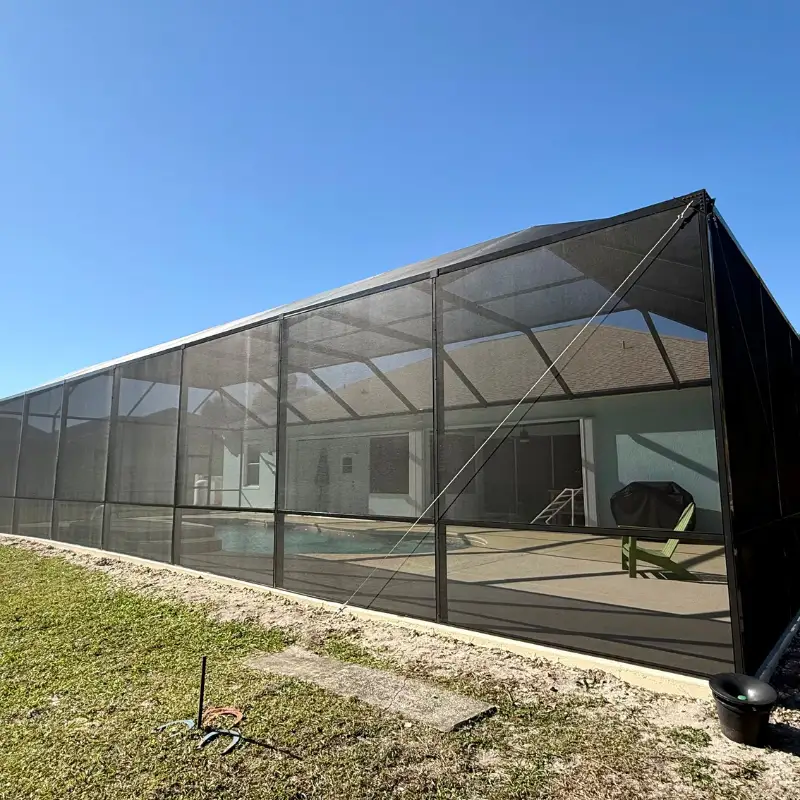
Most homeowners in Florida pay about $10,000 to $20,000+ in total for a professionally installed pool cage. You'll see per-square-foot prices quoted online, but they swing so widely, and leave out so much, that they rarely match what your project will actually cost. A total installed price for your specific pool deck is the number that matters.
Several factors push your total up or down:
Once you understand what drives each part of the cost, budgeting becomes much more manageable.
I'm Cody Lafferty, and with over 10 years of hands-on experience in aluminum and screening across fabrication, installation and project management, I've helped hundreds of Florida homeowners understand exactly what goes into a pool screen enclosure before they commit to a project. In this guide, I'll walk you through every variable so you can plan your investment with confidence.
When we sit down with homeowners in Melbourne or Palm Bay, the first question is almost always about the bottom line. Calculating your pool screen enclosure cost isn't just about measuring the water in your pool. It's about the total footprint of the area you want to protect.
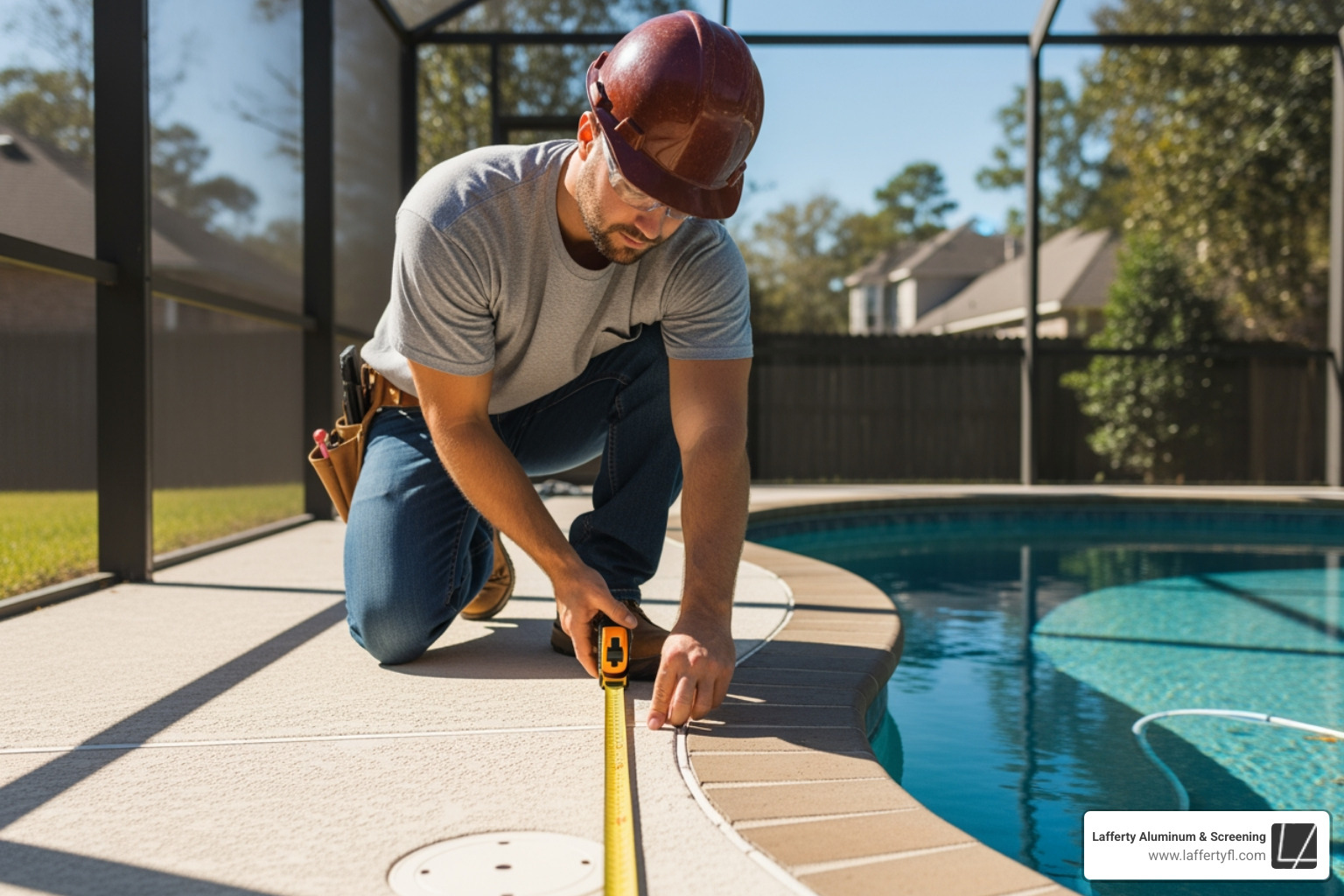
To find your footprint, measure the length and width of the pool deck the cage will sit on. For example, a standard 12x24 foot pool usually needs an 18x30 foot enclosure to leave walking space around the water, which works out to 540 square feet.
The catch is that two enclosures with the same footprint can cost very different amounts. A taller cage needs heavier framing. A mansard roof needs more labor than a flat one. A beachside address needs stronger engineering than an inland one. That's why we price every enclosure as a complete project after measuring your space, instead of multiplying by a per-foot rate.
In our experience across Brevard and Indian River Counties, professional installation is non-negotiable. Between the precise engineering required for wind loads and the physical danger of handling large aluminum beams, this isn't a weekend DIY project.
Before the first beam is set, there may be site work, like clearing debris or leveling the ground. Then there's the permit. In Florida, most projects need one, and coastal areas like Satellite Beach or Merritt Island often require specialized engineering plans to meet hurricane codes. When you build with Lafferty, we handle the engineering and permitting for you.
The material you choose is one of the biggest factors in your total price. As noted in this Screened Pool Enclosure Cost Guide, each material offers a different balance of durability and price.
Building a Pool Screen Enclosure: Costs and Key Considerations highlights that while screen is cheaper up front, polycarbonate and glass often last longer and protect better against the elements, which can save you money on pool chemicals and cleaning over time.
Height isn't just about whether you can stand up. It changes the total amount of material and the wind load on the structure. As a cage gets taller, the frame has to be reinforced to handle higher wind speeds, so the cost goes up.
As we discuss in our guide on How Much Does It Cost to Put a Screen Around a Pool, standard-height enclosures are the sweet spot for most homeowners. They allow for comfortable movement and patio furniture without the structural cost of a two-story "mega-cage."
The shape of your roof does more than look good. It determines how rain, debris and wind interact with your enclosure.
Complex shapes like a mansard or custom hip roof add to your total because of the extra labor and specialized corner joints they require.
Living on the Space Coast means we build differently than contractors in the Midwest. The cost of a pool screen enclosure in Florida is shaped by the Florida Building Code, which is among the strictest in the nation because of hurricane risk.
If you live in a coastal spot like Cocoa Beach or Indialantic, your enclosure must be engineered for the wind speeds required at your address. That means thicker aluminum extrusions, plus kick panels along the bottom of the walls to keep out dirt and pets. Those requirements raise the cost compared with an inland build.
For our neighbors in Vero Beach and Sebastian, salt air is a constant enemy. We always recommend powder-coated aluminum frames and stainless steel fasteners. These upgrades add to the initial cost, but they prevent the "white rust" and structural failure that cheap materials suffer within just a few years. You can read more about these local factors in our post on How Much Does a Screen Enclosure Cost in Florida.
Don't forget the features that make the space usable. Each one adds to your total:
When you get a quote from us, here's what comes with your enclosure:
Learn more about our pool screen enclosures.
A pool cage is an investment that needs a little care to last its full 20–25 year lifespan. The screen mesh itself usually lasts about 10 to 12 years before the Florida sun makes it brittle.
When that time comes, knowing How Much Does It Cost to Replace Pool Screens helps with your long-term budget. A full rescreen of a standard-sized cage typically runs about $3,000 to $7,000+. You can replace individual panels for $200+ each, but it's often more cost-effective to rescreen the whole structure at once to get uniform tension and color.
Panel pricing varies by location, so it's best to call our office at (321) 652-1078 for a quote.
A little maintenance goes a long way:
Rescreening a standard-sized pool enclosure in Florida typically costs about $3,000–$7,000+, depending on the size of the cage and the screen type you choose. Check out our detailed breakdown on How Much Does It Cost to Replace Pool Screens for more specifics.
Yes, usually in a good way. A screened enclosure with locking doors acts as a safety barrier, which many insurance companies view as a way to prevent accidental drownings (the "attractive nuisance" doctrine). This can sometimes lead to lower premiums. Always check whether the structure itself is covered under your "other structures" policy in case of hurricane damage.
Absolutely. While most people think of in-ground pools, above-ground enclosures are becoming popular. Budget dome kits attach directly to the pool's top rail or a surrounding deck, but they don't offer the strength or longevity of a custom aluminum cage. Learn more in our above-ground pool enclosure guide and our post on How Much Is a Pool Enclosure in Florida.
Most projects start about 2–4 months after signing, which covers design, engineering and permitting. Lead times change through the year, so check with our team for an accurate timeline. Once work begins, the on-site build usually takes 3–10 business days.
Budgeting for your dream pool cage doesn't have to be a guessing game. Once you understand that your total cost comes from size, materials, height, roof design and the engineering our Florida climate requires, you can make an informed decision that adds value to your home for decades.
At Lafferty Aluminum & Screening, our family-owned team has over 30 years of combined experience and more than 7,000 completed projects for our neighbors in Melbourne, Palm Bay, Viera and Vero Beach. We take pride in quality craftsmanship and materials that stand up to the salt air and summer storms of the Space Coast. Licensed Florida contractor #19-AL-CT-00114.
Ready to see what your project will cost? Request a free estimate, and let's build something great together.
We're excited to learn more about your needs and provide you with a personalized quote. Please fill out the form, and our team will get back to you with a detailed estimate to kickstart your project.


